
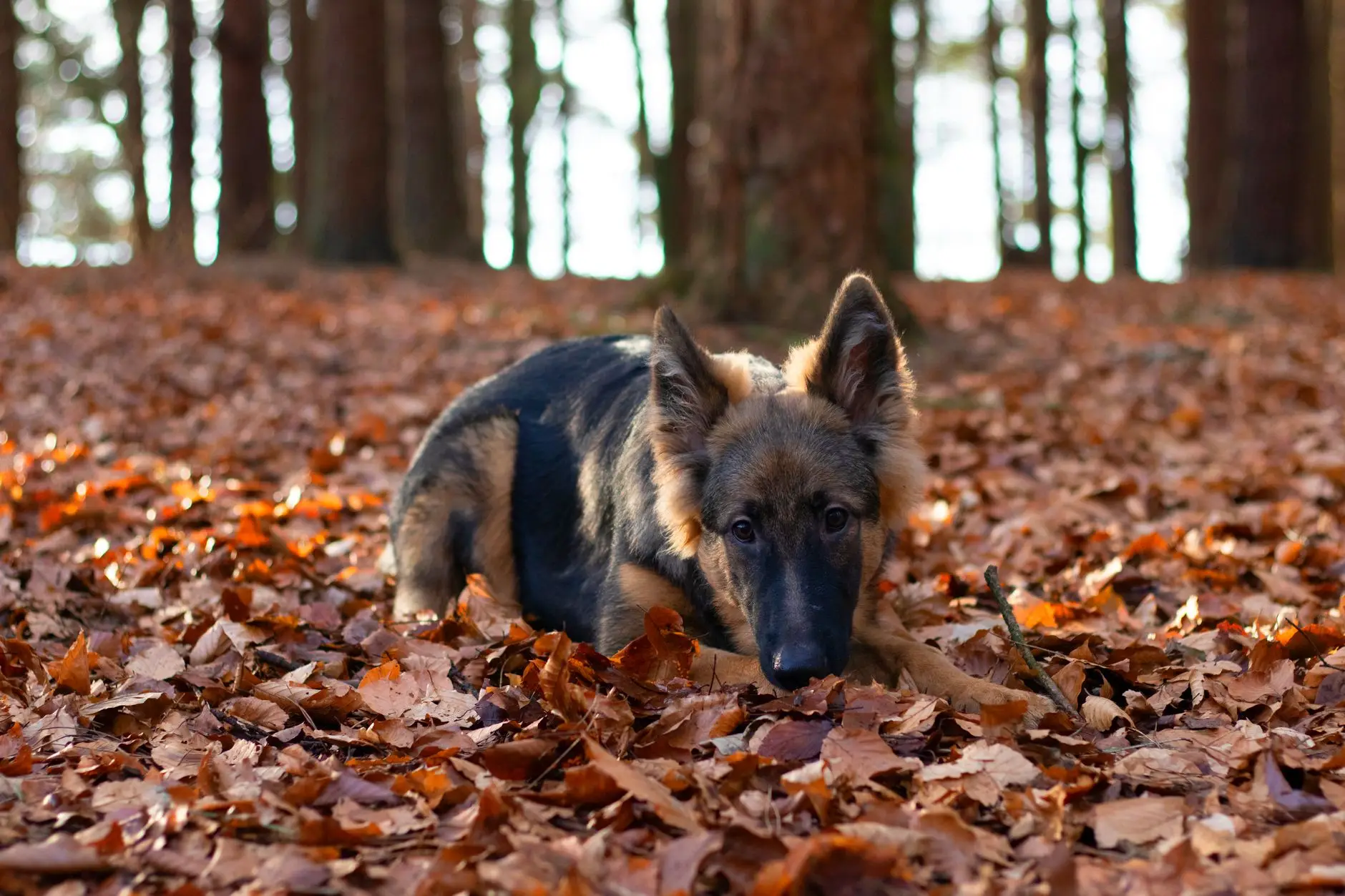
Pets gain most of their weight between September and February, and almost nobody notices it happening. Walks get shorter as the evenings darken and the rain sets in, but the food bowl stays exactly the same. A few hundred grams a month is invisible week to week and substantial by spring.
Why autumn is when it starts
The arithmetic is simple and the timing catches people out.
Through the summer a dog in Surrey might get two long walks a day, plus garden time, plus outings at the weekend. From late September the evening walk moves into the dark and the rain, and it gets shorter. The weekend hike becomes a weekend errand. A dog that was moving for ninety minutes a day is now moving for thirty.
Meanwhile the food does not change. The scoop is the same, the snacks are the same, and there are usually more of them, because a wet dog that has been indoors all day gets something to settle it.
Cats follow the same curve. A cat that patrolled a garden in August is on a windowsill in October, and the bowl is still topped up on the same schedule.
The change is genuinely invisible day to day. You see your pet constantly, which makes you the least likely person to notice a gradual change. That is not carelessness, it is how perception works.
Why it matters more than the number
- Joints. Every extra kilogram loads every joint at every step. In a pet with early joint change, weight is the single biggest thing an owner controls
- Breathing. Extra weight makes flat-faced breeds work harder and reduces exercise tolerance in every dog
- Diabetes risk in cats, which rises substantially with body weight
- Heart and blood pressure, which have to work harder
- Anaesthetic risk, which is higher in overweight pets should a procedure ever be needed
- Grooming. A cat that cannot reach its back end stops grooming there, and the coat mats. If your cat has recently become scruffy over the hips, weight is one of the first things to check
- Quality of life and lifespan. Lean pets stay comfortable and mobile for longer
Fat tissue is also biologically active rather than inert and contributes to inflammation, which is part of why weight and joint discomfort feed each other.
How to check at home, properly
The scale is useful for tracking but it does not tell you whether your pet is the right weight. Use your hands. A minute, and it works for both species.
- Ribs. Run your hands flat along the chest. You should feel the ribs easily with light pressure, like the back of your knuckles. If you have to press, there is too much covering
- From above. Standing over your pet, there should be a visible waist behind the ribs. Straight-sided or bulging is too heavy
- From the side. The belly should tuck up from the ribcage toward the back legs rather than running level
- Cats specifically. A small primordial pouch of loose skin on the belly is normal and is not fat. A belly that swings when your cat walks is
Weigh at the same time in the same conditions, monthly, and write it down. A five percent change is meaningful and you will not see it any other way. For a 5 kg cat that is 250 grams, which sounds trivial and is not.
What actually works
- Measure the food. Not a mug, not a scoop filled by eye. Eyeballed portions are routinely out by twenty percent or more
- Count the extras. Snacks, chews, training rewards and what falls off the table. In a small dog these are frequently a quarter of daily intake
- Use the daily food as rewards rather than adding on top. Take a portion out of the bowl in the morning and use it through the day
- Swap the extras for green beans, carrot or cucumber in dogs. Most are happy with the ritual rather than the calories
- Do not free-feed cats. Set meals let you see what is actually eaten, which also means you notice on the day a cat stops eating
- Feed multiple pets separately. The bold one is not eating only its own portion
- Keep moving in the wet. Two shorter walks beat one skipped one. Sniffing walks tire a dog more than distance and work in the dark and rain
- Play with cats indoors, twice daily in short bursts. Food puzzles work well and slow eating down
The mistake worth avoiding
Do not simply reduce the current food by a large amount. That cuts vitamins and minerals along with the calories, and a pet on a heavily restricted portion of ordinary food can end up underfed nutritionally while still overweight.
Rapid weight loss in cats is genuinely dangerous. A cat that loses weight too fast, or stops eating during a diet, can develop a serious liver condition within days. Cats should never be crash-dieted, and a cat that has stopped eating for more than a day needs to be seen whatever the reason.
Our nutritional counseling service is where a realistic target weight, a daily amount and a sensible rate of loss get worked out for your specific pet, including how to handle the household members who feed on the side.
When weight change is not about food
Bring your pet in rather than starting a diet if you see:
- Weight gain despite no change in food or activity
- Weight loss despite a normal or increased appetite, which in an older cat is a classic pattern worth investigating
- A pot-bellied appearance with thin limbs
- Drinking or urinating noticeably more
- Coat changes, hair loss or skin problems alongside weight change
- Lethargy, or a marked drop in exercise tolerance
- Any rapid change in either direction
A cat carrying extra weight also grooms less effectively, which shows up as hairballs and a coat that has changed. Our guide to how often hairballs are actually normal covers where that line sits.
An autumn weigh-in is sensible regardless, and our wellness and vaccination programs are where the weight, the body condition and the plan get recorded so next year’s comparison means something.
Frequently asked questions
My dog only gained half a kilo. Does that matter?
It depends on the dog. Half a kilo on a 35 kg labrador is minor. On a 5 kg terrier it is ten percent of body weight, which in human terms is a stone or more. Judge by proportion and use the hands-on check rather than the scale alone.
How much should I actually be feeding?
Less than the bag suggests, usually. Feeding guides are averages for unneutered active adults and most pets are neither. They are a starting point to adjust from. Bring the bag to your appointment and we will work out a real amount.
My cat begs constantly. Is she actually hungry?
Often it is habit and attention rather than hunger, particularly in cats fed on demand. Set meals, food puzzles and a short play session at the times she usually begs help a great deal. If the begging is genuinely new and intense, mention it, because increased appetite can itself be a sign worth checking.
Is it safe to start a diet in autumn?
Yes, and it is a good time, because you are getting ahead of the season rather than undoing it in March. The rate matters more than the season. Slow and steady, with cats especially, and with a target agreed rather than guessed.
Does neutering make pets fat?
Neutering lowers energy requirements, so a pet fed the same amount afterward will gain. That is a feeding adjustment rather than an inevitability, and it is worth making at the time rather than a year later. Ask us for the new amount at the post-operative check.
How long should weight loss take?
Slowly. A safe rate is a small percentage of body weight per week, and reaching a target often takes several months. Faster is not better and in cats it is actively risky. We will set a rate and recheck along the way rather than leaving you to guess.
Speak to the team at Tynehead Animal Hospital
If you are not sure whether your pet is carrying extra weight, book a weigh-in and we will show you how to check by hand. Call us on (604) 547-2227.
Published by the team at Tynehead Animal Hospital.
This article is for general educational purposes only and is not a substitute for an in-person veterinary examination or advice about your individual pet. If you have an urgent concern about your pet, contact Tynehead Animal Hospital or your nearest emergency veterinary hospital right away.
Tynehead Animal Hospital
8645 160 St Unit 112, Surrey, BC V4N 1G4
Phone: (604) 547-2227
Email: info@tyneheadanimalhospital.ca
Hours: Monday to Friday 9:00 AM to 7:00 PM; Saturday and Sunday 9:30 AM to 4:00 PM